
What Is Wedding Venue Software? (And Why Generic Event Tools Don’t Work)

Wedding venues manage some of the most complex, detail-driven events in the hospitality industry. Yet many are still relying on a mix of spreadsheets, email threads, PDFs, and generic event tools to coordinate weddings.
At first, these tools seem flexible enough. But as soon as a venue is managing multiple weddings at once, the cracks begin to show. Information becomes scattered, communication breaks down, and staff spend hours chasing down details.
This is where wedding venue software comes in.
What Is Wedding Venue Software?
Wedding venue software is a platform specifically designed to help venues manage the entire planning process between their team and their couples, from initial setup to final execution.
Unlike general event management tools, wedding venue software is built around how weddings are actually planned. It supports the ongoing collaboration between venues and couples, the need for structured decision-making over time, and the complexity of managing guests, seating arrangements, and selected options such as add-ons, meal choices, and venue packages.
At its core, wedding venue software brings everything into one system. Instead of juggling multiple tools, venues and couples work together in a shared platform where every detail, from guest lists to planning decisions, is organized, updated, and accessible in real time.
Why Generic Event Tools Don’t Work for Wedding Venues
Most wedding venues don’t start with specialized software. Instead, they piece together a system using email, spreadsheets, shared documents, and sometimes a generic event platform or CRM.
While this approach can work for simpler events, weddings introduce a level of complexity that these tools were never designed to handle.
One of the biggest challenges is that wedding planning is not a one-time setup. It is an ongoing process. Details evolve over months. Guest counts change. Couples make decisions in stages. Generic tools typically assume static information, which makes them poorly suited for a dynamic planning workflow.
Another issue is how quickly information becomes fragmented. Guest lists may live in one spreadsheet, seating charts in another document, and key decisions buried in long email threads. When everything is spread across different systems, venue staff are forced to constantly track down information, increasing the risk of mistakes and missed details.
This fragmentation also leads to a significant operational burden. Without structured workflows, venue teams often spend hours following up with couples for missing information, reminding them about deadlines, and answering the same questions repeatedly. What should be a streamlined process turns into a cycle of manual work.
From the couple’s perspective, the experience can feel just as disorganized. Instead of having a clear, guided process, they are often asked to switch between tools, search through emails, and re-enter information multiple times. This adds unnecessary stress to an already complex planning experience.
Ultimately, the core problem is that generic software is not built around the operational workflow of wedding venues. It forces venues to adapt their process to the tool instead of supporting how weddings are actually planned.
What Makes Wedding Venue Software Different?
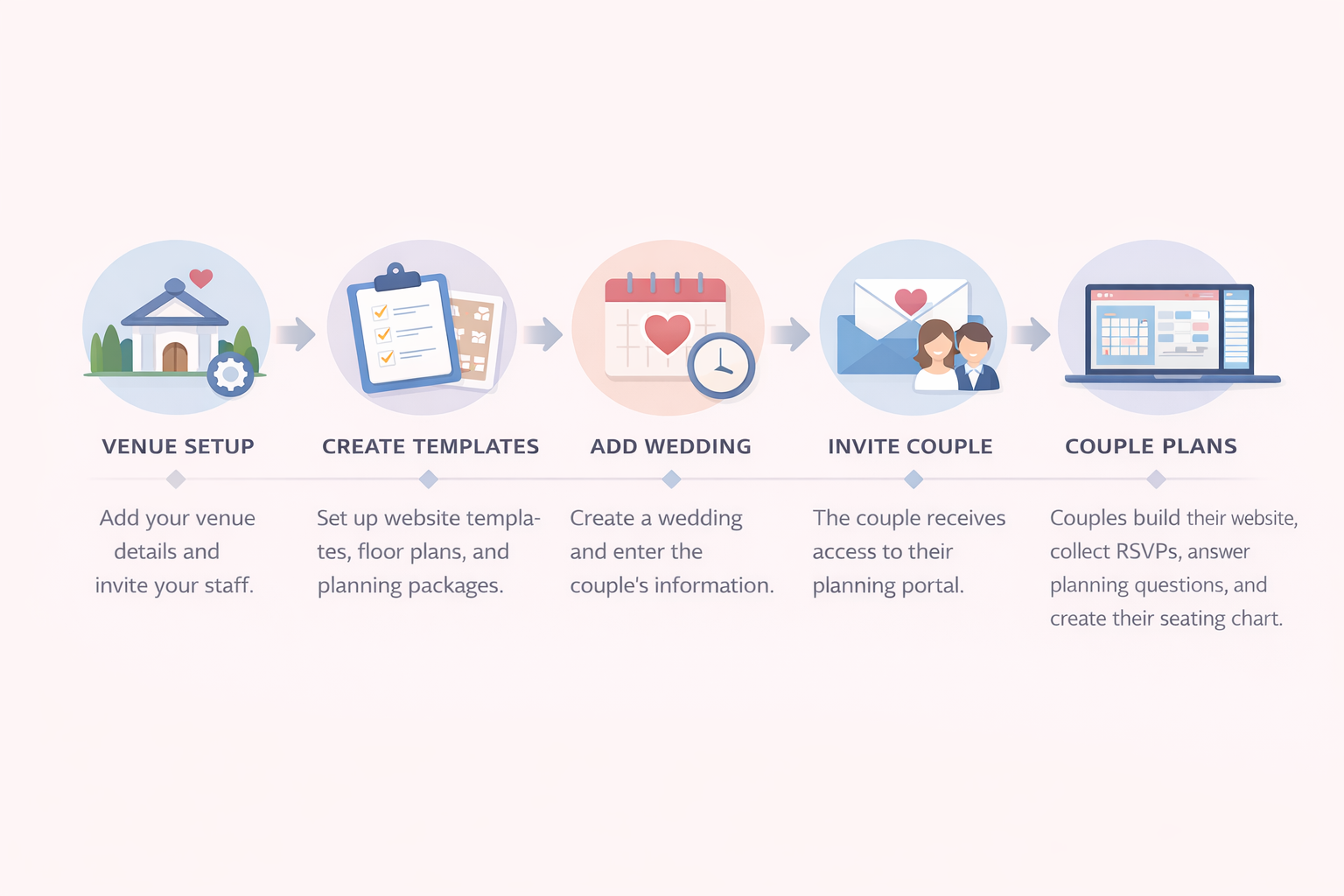
Wedding venue software takes a fundamentally different approach by digitizing and standardizing the entire planning process.
Instead of relying on disconnected tools, everything is centralized. Guest lists, RSVPs, seating charts, planning decisions, and communication all live within one system. This eliminates the need to search across emails or reconcile conflicting documents.
One of the most important differences is the ability for venues to define their planning process upfront. Venues can set the structure for how weddings should be planned, including required questions, deadlines, and decision points, and then apply that structure consistently across every event. This ensures that no detail is missed and that every couple follows a clear, guided workflow.
Couples, in turn, receive their own dedicated planning portal. Within this space, they can manage all aspects of their wedding, including submitting planning details, tracking deadlines, building their seating chart, and creating their wedding website. Instead of juggling multiple tools, everything is organized in one place.
As couples interact with the system, their data automatically syncs back to the venue. Guest RSVPs update guest lists in real time, seating charts reflect the latest information, and planning decisions are instantly visible to the venue team. This removes the need for manual data entry and significantly reduces the risk of errors.
Key Features of Wedding Venue Software
While different platforms offer different capabilities, the most effective wedding venue software is designed to support both the venue and the couple within a single, connected system.
Instead of treating these as separate experiences, modern platforms bring both sides together so information flows seamlessly between them throughout the planning process.
Features for Wedding Venues
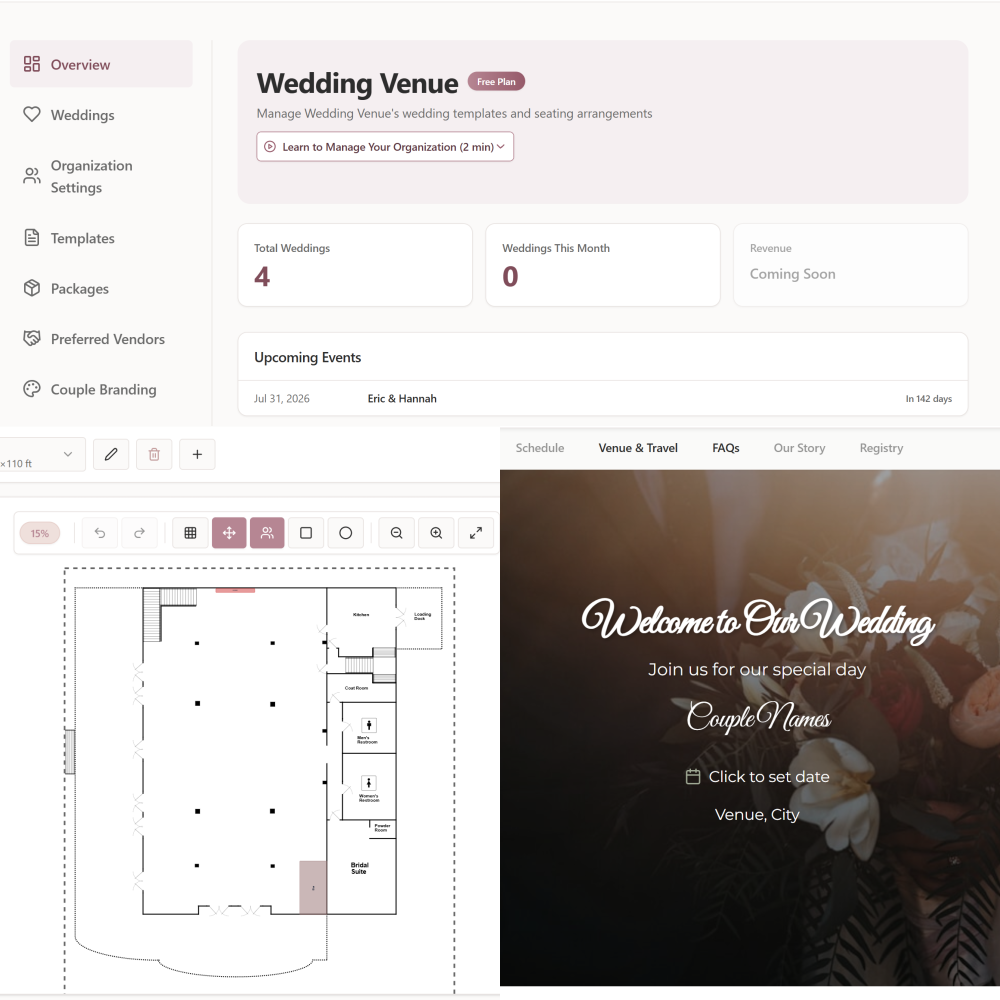
Wedding venues use the platform to define and manage how weddings are planned at their location. This includes setting up reusable templates and standardizing the planning process across every event.
Venues can create wedding website templates that include their venue details, build and save floor plans for different layouts, and define planning questions that couples are required to complete. These questions often include guest counts, meal selections, and optional add-ons such as bar packages or enhancements. The system then automatically reminds couples to complete these items before their deadlines, reducing the need for manual follow-up.
By setting this structure once, venues ensure that every couple follows the same organized process without requiring constant manual oversight.
Features for Couples
Couples interact with the platform through their own dedicated planning portal, where they manage all aspects of their wedding in one place.
Within this portal, couples can create their wedding website, collect RSVPs from guests, build their seating chart using the venue’s floor plan, and complete the planning questions required by the venue. They can also select options such as meal choices and add-ons based on what the venue offers.
Communication is also centralized within the platform. Instead of relying on scattered email threads, couples and venues can manage conversations in one place, with automated email reminders when messages are waiting for a response.
This replaces the need for spreadsheets, emails, and scattered documents with a single, guided experience.
How Everything Connects
The most important advantage of wedding venue software is how these two sides are connected.
As couples enter information, it automatically updates inside the venue’s system. Guest RSVPs feed directly into the guest list. Seating charts reflect real-time guest data. Planning decisions such as meal selections and add-ons are instantly visible to the venue team.
At the same time, venues maintain control over the structure of the planning process, ensuring that all required information is collected on time and in the correct format.
This connection eliminates manual data entry, reduces errors, and keeps both the venue and the couple working from the same, up-to-date information at all times.
The Real Impact for Wedding Venues
Adopting wedding venue software does more than improve organization. It transforms how venues operate on a day-to-day basis.
By centralizing information and automating repetitive tasks, venues can save hours of administrative work each week. Instead of chasing down details or manually updating documents, staff can focus on delivering a better experience for their clients.
Standardization is another major benefit. When every wedding follows the same structured process, venues can maintain consistency across events, reduce errors, and ensure that nothing falls through the cracks.
Communication also improves significantly. With clear information available in one place, both couples and guests have fewer questions, and venue teams spend less time responding to repetitive inquiries.
Perhaps most importantly, the experience for couples becomes far more streamlined. Instead of navigating a fragmented system of tools and emails, they can plan their entire wedding in one organized, intuitive platform.
A New Category of Software for Wedding Venues
As the wedding industry continues to evolve, more venues are recognizing that generic tools are no longer sufficient for managing complex, high-touch events.
This has led to the emergence of a new category: software built specifically for wedding venues.
Platforms like Seated With Love are designed around the real workflow between venues and couples. By connecting both sides in a single system, they enable venues to standardize their planning process, reduce administrative overhead, and deliver a more seamless experience from start to finish.
Why Venues Choose Seated With Love
Seated With Love is designed specifically for how wedding venues actually plan and manage weddings.
Instead of relying on a mix of spreadsheets, email threads, and disconnected tools, venues can bring their entire planning process into one platform. This allows both the venue and the couple to stay aligned, with all information organized and updated in real time.
By connecting venues and couples in a shared system, Seated With Love reduces the need for manual follow-ups, eliminates scattered information, and ensures that every wedding follows a consistent, structured process.
The result is less administrative work for your team and a more seamless planning experience for your couples.
Final Thoughts
For years, wedding venues have been forced to rely on tools that were never designed for how weddings are actually planned. The result has been inefficiency, fragmented information, and unnecessary stress for both staff and couples.
Wedding venue software changes that by bringing structure, clarity, and organization to the entire process.
Instead of piecing together systems, venues can now manage every wedding in one place, ensuring that nothing is missed, communication is clear, and every event runs smoothly.
As more venues adopt this approach, it is becoming clear that wedding venue software is not just a convenience. It is quickly becoming the standard for modern wedding operations.
Frequently Asked Questions
What is wedding venue software?
Wedding venue software is a platform designed specifically to help venues manage the entire wedding planning process. It allows venues to coordinate with couples, track guest lists, collect planning decisions, manage seating charts, and keep all wedding details organized in one place.
How is wedding venue software different from event management software?
Wedding venue software is built for the unique workflow of weddings, which involves ongoing collaboration between venues and couples over several months. Generic event management software is typically designed for one-time events with fixed details, making it less effective for managing changing guest lists, planning decisions, and long-term communication.
Why do wedding venues need specialized software?
Weddings are more complex than most events and require structured planning, constant updates, and coordination between multiple parties. Without specialized software, venues often rely on spreadsheets and email, which leads to scattered information, repeated work, and increased risk of errors.
What features should wedding venue software include?
Most wedding venue software includes tools for managing guest lists, collecting RSVPs, building seating charts, tracking planning decisions, and creating wedding websites. The key advantage is that all of these features are connected, allowing information to update automatically across the platform.
Can wedding venue software help reduce administrative work?
Yes. By automating reminders, centralizing information, and eliminating manual data entry, wedding venue software can significantly reduce the amount of time staff spend following up with couples and managing planning details.
Do couples use wedding venue software too?
Yes. Most platforms provide couples with their own planning portal where they can manage their wedding details, submit required information, track deadlines, and build their seating chart. This creates a more organized and streamlined planning experience.
How does wedding venue software improve the client experience?
Wedding venue software simplifies the planning process for couples by keeping everything in one place. Instead of juggling emails, documents, and multiple tools, couples can manage their entire wedding in a single, structured system, which reduces stress and confusion.
Is wedding venue software suitable for venues managing multiple weddings?
Yes. Wedding venue software is especially valuable for venues handling multiple weddings each year. It allows them to standardize their planning process, reuse templates, and ensure consistency across all events while reducing administrative workload.