
How Wedding Venues Create Floor Plans and Manage Seating Across Every Wedding

Creating a seating chart is not the hard part. Managing floor plans, guest lists, and constantly changing seating across every wedding is where things break.
One wedding has 120 guests, the next has 220, and layouts change every time. Families get added last minute, and couples send updated seating charts days before the event. By the time your team is preparing for the wedding, you are often working with multiple versions and unclear information.
For most wedding venues, the issue is not experience. You already know how weddings should run. The challenge is that the process for managing layouts and seating is not built to handle constant change.
In this guide, we will walk through how wedding venues actually manage floor plans and seating arrangements across weddings, and how to stay in control even as details shift. We will walk through this using Seated With Love, since it allows venues to manage this process for free while keeping everything in one place.
Why Floor Plans and Seating Are So Difficult for Wedding Venues
Every wedding is different, which means every layout is different. That alone introduces complexity, but the real challenge comes from how information is collected and updated.
Guest counts are rarely final until late in the process. Couples often build seating charts in their own format, then send updates through email, text, or spreadsheets. As changes come in, new versions are created, and it becomes unclear which one is actually correct.
Most venues are not just managing a layout. They are managing moving information across multiple sources, often without a clear system tying it all together.
This is why even experienced teams end up spending hours tracking down details, rebuilding seating charts, and double checking information before the event.
The Real Problem Is Not the Seating Chart
The difficulty is not placing guests at tables. It is managing everything that happens before and after that step.
Guest lists change. Seating charts get revised multiple times. Information lives in different places. Last minute updates affect the entire layout.
Without a structured process, every change creates more work. That is why venues that stay organized are not simply better at seating charts. They are working from a system that keeps everything connected.
What a Well Run Venue Process Looks Like
Venues that consistently stay organized approach this differently. Instead of reacting to changes, they build a process that handles them.
They work from a single source of truth where guest lists, seating, and layouts are connected. Their floor plans reflect the actual venue space, and couples are guided through a structured way of providing information. Deadlines are clear, and final versions are easy to identify.
When this structure is in place, the team is no longer chasing updates. The process keeps everything aligned.
Step 1 - Set Up Your Base Floor Plan Once
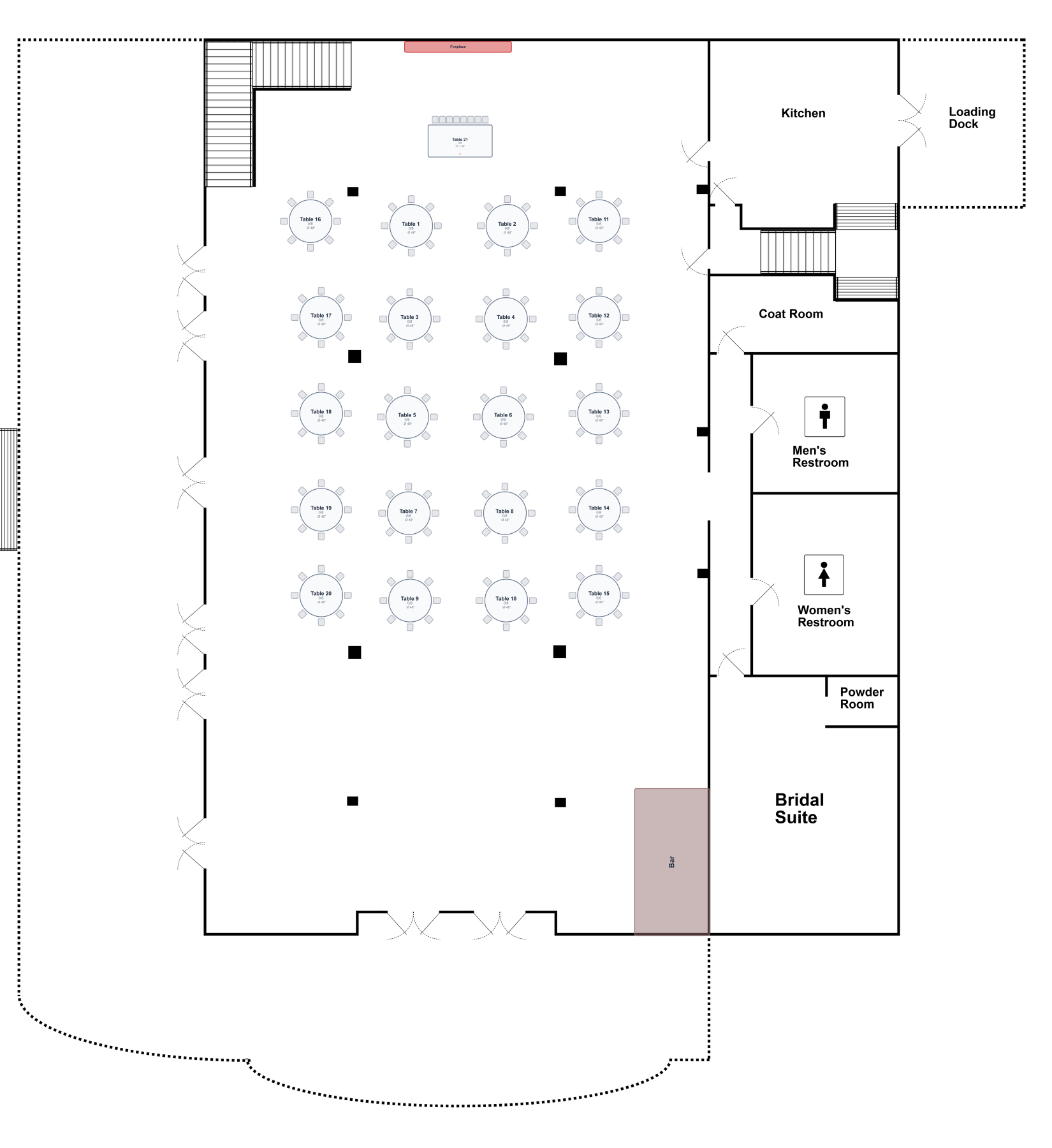
Rather than rebuilding layouts for every wedding, strong venues start with a base floor plan that represents the actual space.
This base layout includes the physical structure of the venue, standard table placements, and key areas like dance floors and service zones. It becomes the starting point for every event, saving time and ensuring consistency.
In practice, this means creating a reusable floor plan template that reflects how your venue is typically set up.
In Seated With Love, this is done by creating a template floor plan inside your venue. This template represents your space without any assigned guests and can be reused across all weddings.
Within that template, you can:
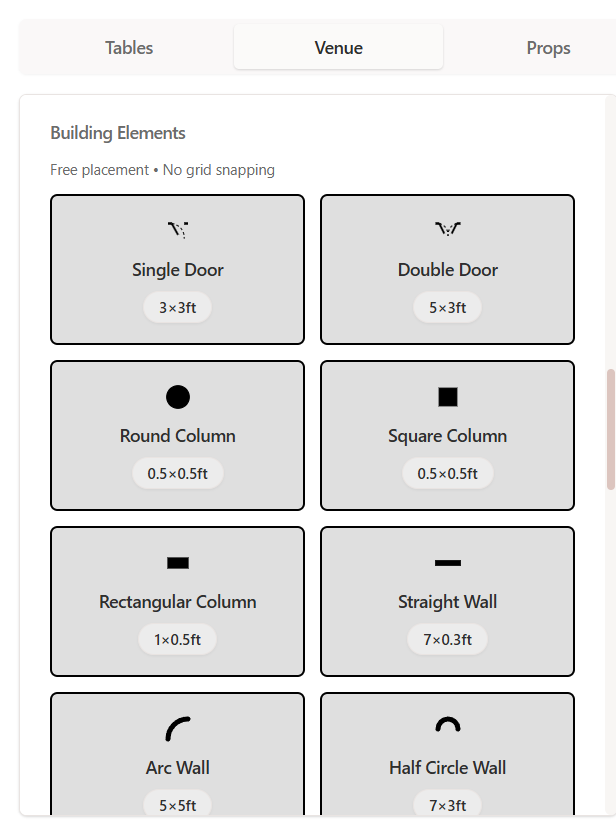
- Add walls, doors, and structural elements to match your venue
- Place tables in their typical layout
- Add key areas like dance floors, bars, or service stations
- Define standard table sizes and seating capacity
Once this template is set up, every new wedding can start from this same layout instead of starting from scratch.
For venues with a subscription, the Seated With Love team can also digitize your floor plan for you so it matches the exact dimensions and structure of your space. This ensures that every layout you create is accurate from the beginning.
The result is a consistent foundation that your team can rely on for every event, while still allowing flexibility to adjust for each wedding.
Step 2 - Adapt the Layout for Each Wedding
Once a base floor plan is in place, it can be adjusted for each wedding without starting over.
Guest counts, table spacing, and event flow often vary from wedding to wedding. A smaller event may require fewer tables and more open space, while a larger one may require tighter spacing and different positioning.
Instead of rebuilding the layout each time, the goal is to start from your base floor plan and adapt it to the specific wedding.
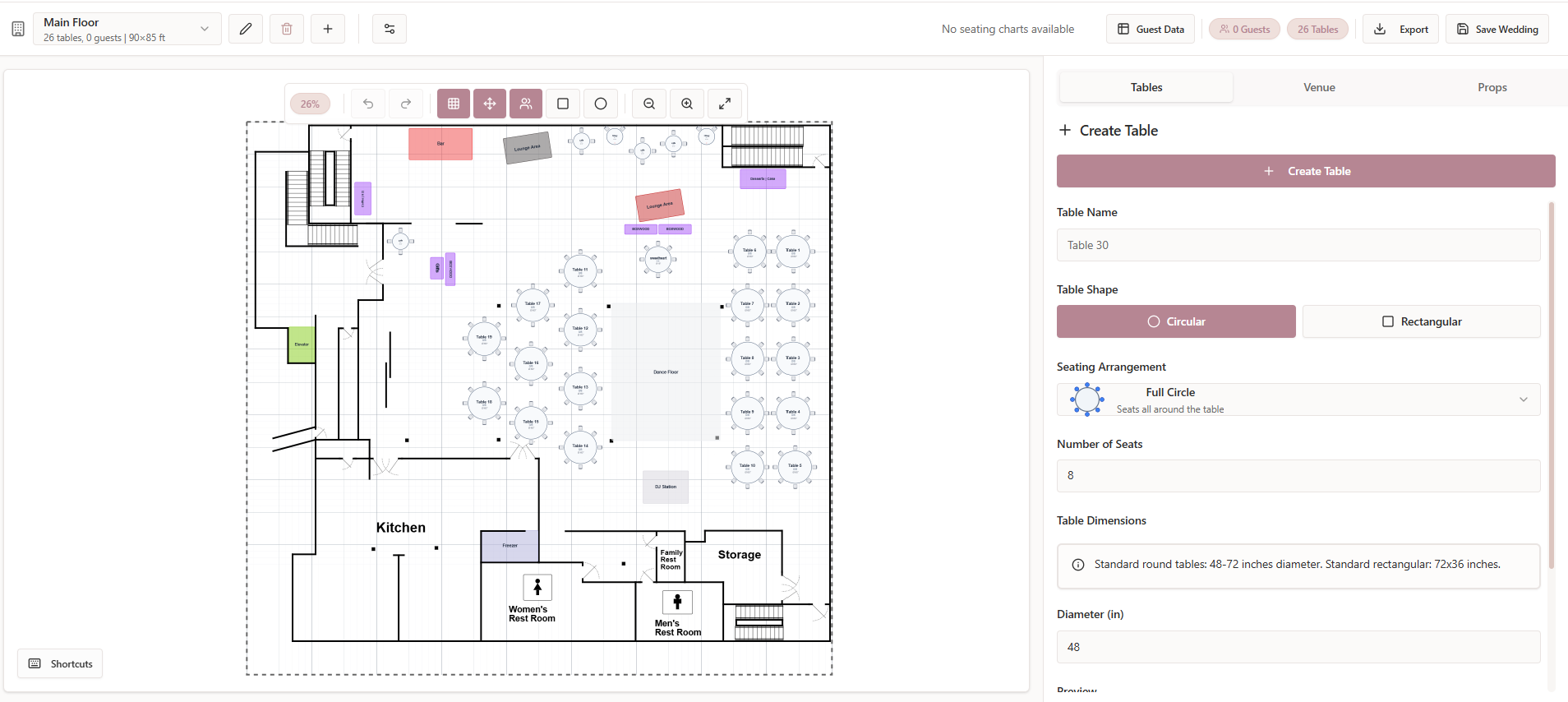
In Seated With Love, this process starts by creating a wedding. Each wedding has its own working version of your floor plan, which allows you to make changes without affecting your base template.
From there, you can adjust the layout directly within that wedding by:
- Adding or removing tables based on the guest count
- Moving tables to adjust spacing and flow
- Changing table sizes or seating capacity
- Repositioning key areas like the dance floor or bar
Because everything is visual, your team can immediately see how the layout changes as you make adjustments instead of trying to interpret it from a spreadsheet or document.
For example, if a wedding has fewer guests, you might remove several tables and create more open space. If the guest count increases, you can add tables and tighten the layout while still maintaining clear walkways.
The key is that each wedding has its own version of the layout, so you can adapt it freely while keeping your original floor plan intact.
Step 3 Standardize Tables and Seating Capacity
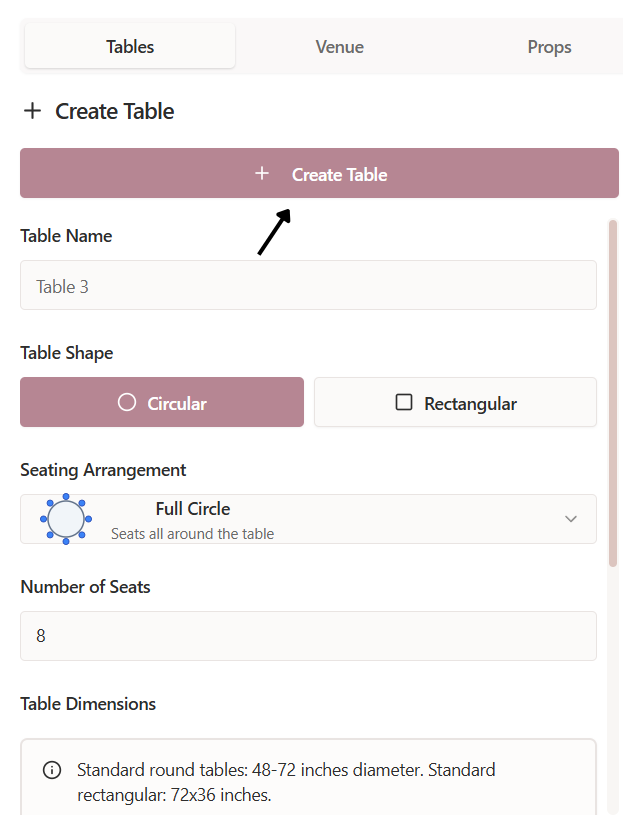
Consistency in table setup makes seating much easier to manage. When table shapes, sizes, and capacities are clearly defined, it becomes easier to organize guests and maintain balance across the room.
Venues typically standardize:
- Table shapes such as round or rectangular
- Number of seats per table
- Spacing between tables
When these elements are consistent, the seating arrangement reflects the real setup and avoids confusion during execution.
In Seated With Love, tables can be configured to match the exact setup used in your venue, which helps ensure accuracy across every event.
Step 4 - Build a Complete Layout with Venue Elements
A seating arrangement only works if it reflects the full environment of the event. Tables do not exist in isolation, and the layout needs to account for everything happening in the space.
This includes elements like dance floors, bars, buffet stations, and entrances. It also includes structural features such as walls, doors, and columns that affect how the layout functions.
By incorporating these elements into the floor plan, venues can design layouts that work in real life, not just in theory. This reduces setup issues and improves communication across the team.
Step 5 - Collect Seating Information from Couples in a Structured Way
This is where most seating processes break down. Couples often build seating charts in their own tools, then send updates through email, spreadsheets, or PDFs. As changes are made, multiple versions start circulating, and it quickly becomes unclear what is current.
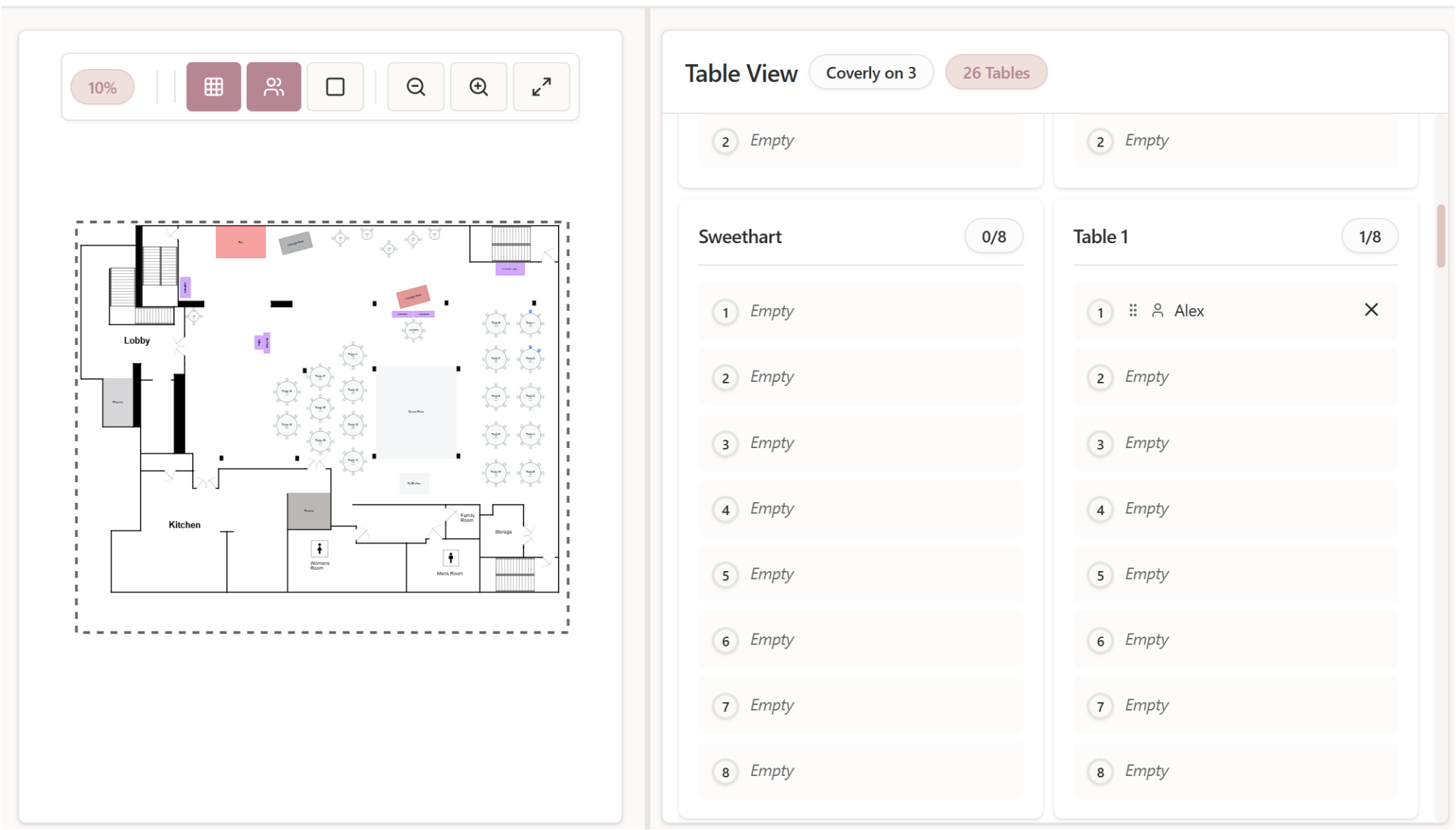
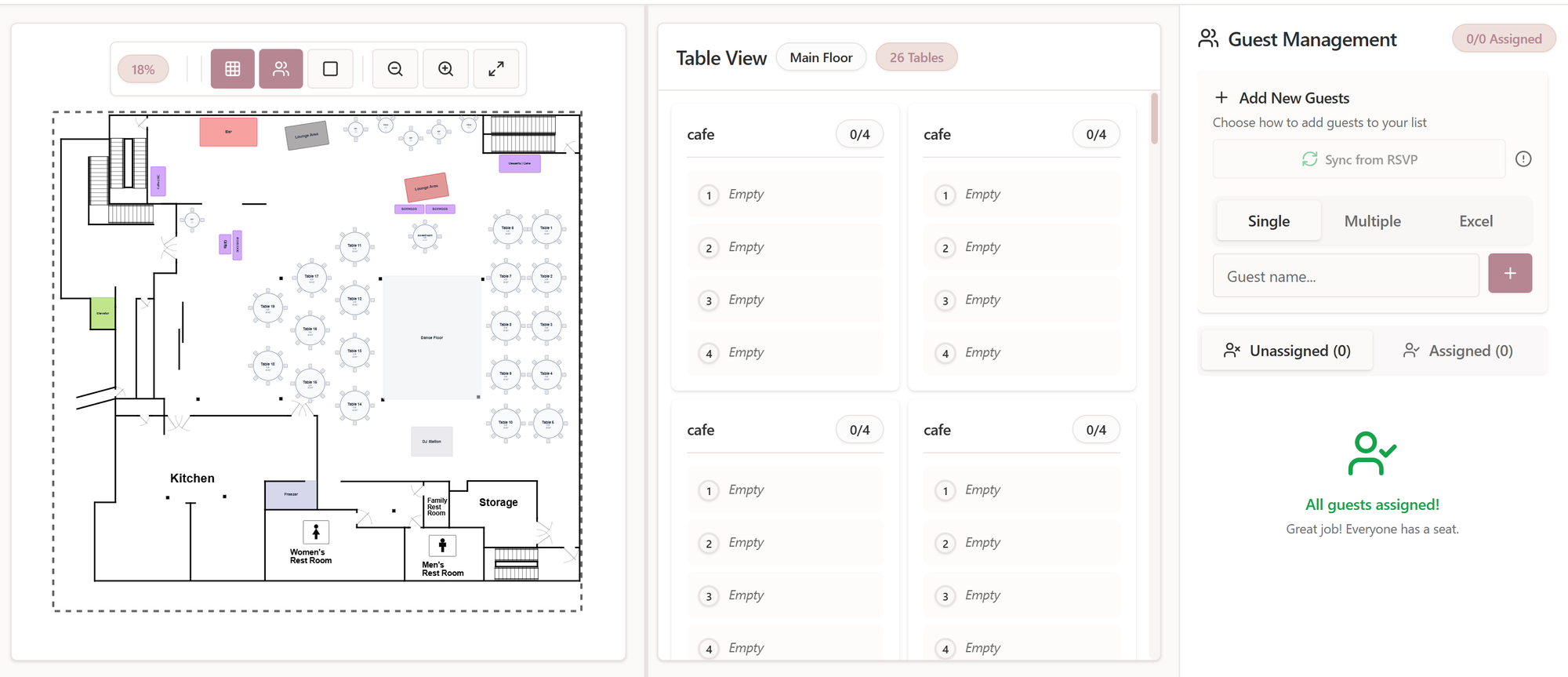
Seated With Love eliminates this entirely by giving couples a locked version of the venue’s floor plan directly inside their portal.
Instead of working in separate tools, couples:
- View the exact layout approved by the venue
- Drag and drop guests directly onto tables
- Manage guest details alongside their seating assignments
Because everything happens in one place:
- There are no conflicting versions
- Every update is instantly reflected
- The seating plan always stays aligned with the actual floor plan
This creates a single, reliable source of truth for both the couple and the venue—removing confusion and dramatically reducing back-and-forth.
Step 6 - Handle Changes Without Losing Control
Changes are a normal part of wedding planning. Guests are added, tables shift, and seating needs to be adjusted. The difference is how those changes are handled.
With a structured system, updates happen in one place, and the layout adjusts accordingly. Everyone works from the same version, and there is no need to reconcile conflicting information.
This allows venues to stay in control, even as details evolve. Seated With Love enables you to make changes that affect the couples floor plan and always stays up to date as couples change guest seating or data about their guests such as meal choice.
Common Mistakes Wedding Venues Make
Even experienced venues run into the same challenges when the process is not structured.
- Rebuilding floor plans for every wedding instead of reusing a base layout
- Accepting seating charts in multiple formats
- Managing guest lists separately from seating arrangements
- Allowing changes too late in the process
- Not knowing which version of the seating chart is final
These issues are not caused by lack of experience. They are the result of disconnected workflows.
A Better Way to Manage Floor Plans and Seating
The venues that stay organized are not doing more work. They are using a system that connects everything together.
Floor plans, guest lists, seating arrangements, and communication with couples all live in one place. Instead of reacting to changes, the process keeps everything aligned from the beginning.
This is what allows venues to handle different weddings, different layouts, and constant updates without losing control.
Final Thoughts
Managing floor plans and seating arrangements is not just about creating a layout. It is about managing change in a way that stays organized and predictable.
If your team is still working across emails, spreadsheets, and multiple versions, the process will always feel more difficult than it needs to be.
You can create and manage floor plans and seating arrangements for free using Seated With Love and see how it works with your own venue. For venues that need more advanced features, floor plans can also be digitized and shared interactively with couples, making the entire process easier to manage.
Frequently Asked Questions
How do wedding venues manage seating arrangements?
Wedding venues manage seating by creating a floor plan, defining tables, collecting guest information, assigning seating, and updating arrangements as changes occur. Keeping everything in one system makes this process much easier.
What is a wedding floor plan?
A wedding floor plan is a visual layout of a venue that shows table placement, seating arrangements, and event elements like dance floors and bars. It helps venues plan and manage the event setup before the wedding day.
How do venues handle last minute seating changes?
Venues handle changes by updating guest lists and seating in a centralized system. This ensures that all updates are reflected in real time and that everyone is working from the latest version.
Should wedding venues use seating chart software?
Seating chart software helps venues keep guest lists, layouts, and seating connected. It reduces version confusion, allows real time updates, and makes the entire process easier to manage.