How to Reduce Back-and-Forth Emails With Wedding Clients as a Wedding Venue

If you run a wedding venue, your inbox likely feels like your operations center.
Couples email with planning questions. Guests ask for details. Vendors follow up for confirmations. What starts as communication quickly turns into a constant stream of repetitive messages.
The issue is not that couples are asking too many questions. The issue is that wedding planning is complex, and most venues are still managing it through tools that were never built for it.
According to the The Knot Real Weddings Study 2026, couples spend an average of 7 hours per week planning their wedding and work with around 13 vendors throughout the process. With that many moving parts, communication naturally becomes fragmented when it lives inside email threads.
This is why so many venues feel stuck in endless back-and-forth emails.
The solution is not sending fewer emails. It is changing how communication is structured.
Why Email Breaks Down in Wedding Planning
Email works well for simple conversations. Wedding planning is not simple. A single wedding involves guest management, timelines, vendor coordination, add-ons, seating arrangements, and dozens of decisions that happen over months. Without structure, this leads to the same patterns at nearly every venue.
Couples ask the same logistical questions because information is not centralized. Staff follow up multiple times for missing decisions. Important details get buried in long threads. Over time, this creates unnecessary work and increases the risk of mistakes. At scale, email becomes less of a communication tool and more of a bottleneck.
The Hidden Challenge: Managing Dozens of Decisions With Different Deadlines
Email becomes even more difficult when you look at how wedding planning actually works at scale.
Every wedding requires dozens of decisions from the couple, including guest counts, meal selections, rental choices, vendor details, and timelines. Each of these decisions comes with its own deadline based on vendor requirements and event logistics.
Now multiply that across every wedding your venue is managing. A single venue may be handling dozens or even hundreds of weddings per year, which means tracking hundreds or even thousands of individual planning decisions, all with different due dates.
In an email-based system, there is no reliable way to manage this complexity. Staff are forced to manually track who has responded, what is still missing, and when each item is due. Follow-ups happen one by one, deadlines get missed, and important information ends up scattered across inboxes instead of organized in a clear, structured way.
This is where most communication breakdowns actually happen. It is not that couples are unresponsive. It is that the system they are responding to was never designed to manage multiple decisions with multiple deadlines at scale.
What Modern Couples Expect From Wedding Communication
Couples are not approaching planning the same way they did even a few years ago.
The same study from The Knot shows that 90% of couples now create a wedding website as part of their planning process. That signals a clear shift toward digital, self-serve experiences.
At the same time, expectations for speed and clarity are rising across industries. Research from this McKinsey digital customer care article shows that customers who use digital self-service options report higher satisfaction than those relying on traditional communication methods.
In other words, couples do not want to wait for answers if the information could already be available. They expect a system that helps them plan, not just a person who responds.
The Real Problem With Back-and-Forth Emails
The problem with email is not just volume. It is repetition. Venues end up answering the same questions, collecting the same information, and sending the same follow-ups across every wedding.
This creates three major challenges. First, it consumes time that could be spent on higher-value work. Second, it introduces inconsistency across clients. Third, it creates a fragmented experience for couples who are trying to stay organized.
What feels like “good communication” is often just manual process management.
How Wedding Communication Tools Actually Reduce Emails
Reducing emails does not mean reducing communication. It means shifting communication into a system that removes repetition.
Across industries, this is known as self-service.
In the context of wedding venues, this translates into a few key changes.
Centralized planning instead of scattered conversations
When couples have a dedicated planning portal, they no longer need to email for every update or question.
They can view details, submit decisions, and track progress in one place. This eliminates the need for long email threads and reduces confusion.
Predefined answers instead of repeated questions
Most venues receive the same questions about logistics, timing, and policies.
When this information is built into a wedding website or planning experience, couples and guests can find answers immediately.
Structured decision collection instead of email checklists
Collecting planning details through email leads to incomplete responses and constant follow-up.
Structured planning questions ensure that couples provide complete information by specific deadlines. This replaces multiple email exchanges with a single, guided process.
Automated reminders instead of manual follow-ups
Following up on missing information is one of the most repetitive parts of venue operations.
Automation removes this entirely by sending reminders based on deadlines, ensuring nothing is missed without requiring staff to track each couple manually.
Why Responsiveness Still Matters
Reducing emails does not mean becoming less responsive. In fact, structured communication improves responsiveness. The Knot study highlights that responsiveness is one of the most important factors couples consider when choosing wedding vendors. Clear and timely communication builds trust early in the relationship.
When information is organized and accessible, couples receive answers faster than they would through email. The experience feels more responsive, even with fewer direct messages.
How Seated With Love Helps Wedding Venues Reduce Emails
Seated With Love is built specifically to replace email-driven planning with a structured system designed for wedding venues. Instead of managing each wedding through separate conversations, venues define their planning process once and apply it to every couple.
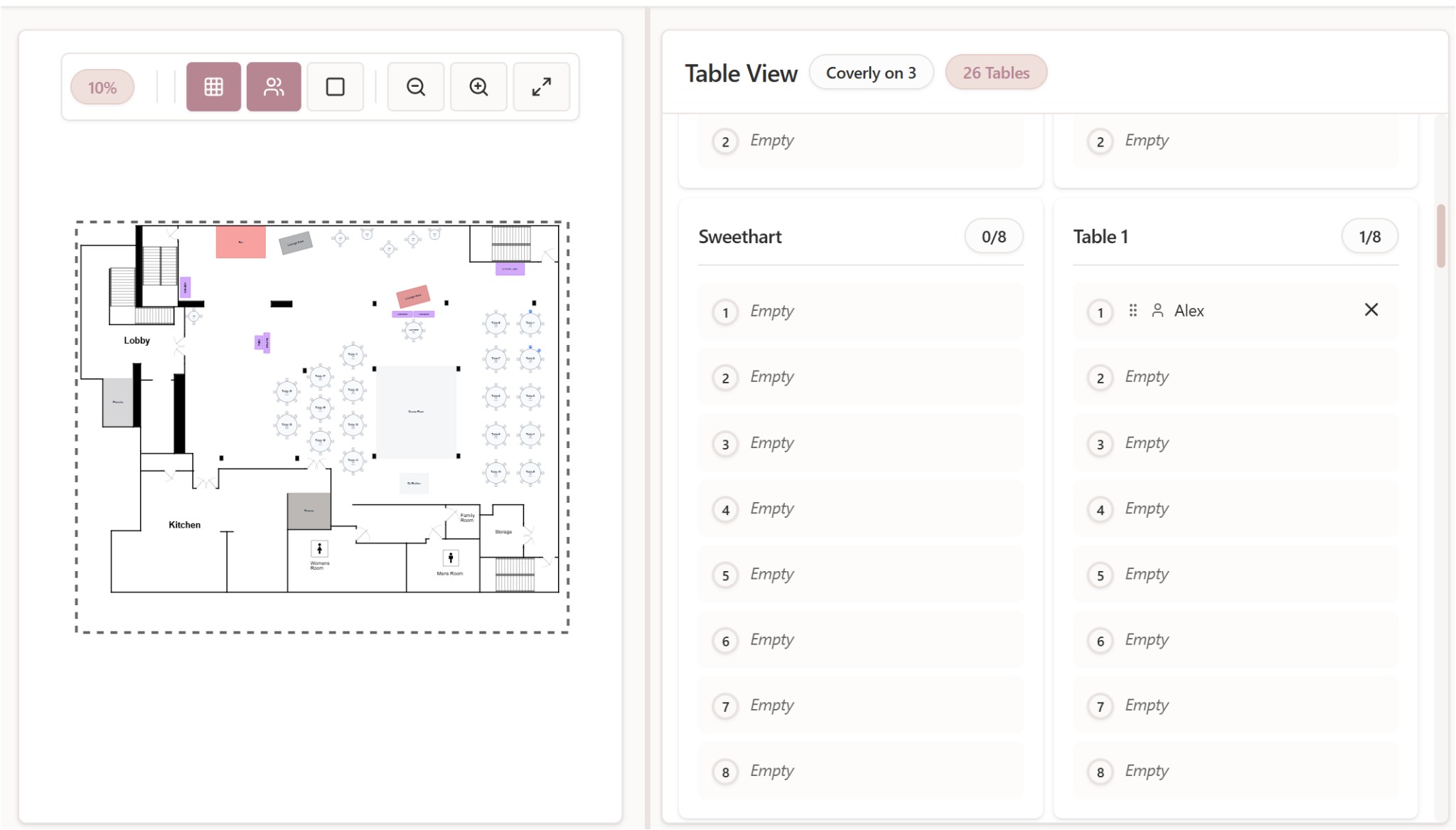
Each couple receives a dedicated planning portal where they can manage their wedding from start to finish. They build their wedding website using preloaded venue information, which reduces guest questions before they happen. They complete planning questions that collect all required decisions in a structured format. Guest lists, RSVPs, and seating charts are connected and update automatically.
All of this information syncs directly back to the venue dashboard, so staff always have the latest details without requesting updates. Automated reminders ensure deadlines are met, removing the need for manual follow-ups. The result is a system where communication happens within a process, not across scattered email threads.
The Outcome for Wedding Venues
When communication is structured, the impact is immediate.
Email volume drops because fewer questions need to be asked. Staff spend less time following up and more time managing the overall experience. Planning becomes consistent across all weddings.
Couples benefit as well. Instead of searching through emails, they have a clear, guided experience that helps them stay on track.
This is not just an operational improvement. It is a better client experience.
Modernizing Your Wedding Planning Process
Wedding planning is not getting simpler. Couples are working with more vendors, expecting faster responses, and relying on digital tools more than ever.
Venues that continue to rely on email as their primary system will continue to feel the strain.
Venues that adopt structured planning systems gain control, consistency, and efficiency.
Start Reducing Emails With Clients
If you are ready to move beyond inbox-driven planning, Seated With Love helps you centralize communication, automate follow-ups, and guide every wedding through a consistent process.