How to Increase Wedding Venue Revenue Without Booking More Weddings

Most wedding venues assume that increasing revenue means booking more weddings. While that can certainly drive growth, it is often the most difficult and resource-intensive path. The more scalable and overlooked opportunity is increasing the value of the weddings you already have on your calendar.
Every booked wedding already contains multiple opportunities for additional revenue through upgrades, enhancements, and add-ons. Couples are not only willing to spend more, they expect to personalize their experience. The challenge is not demand. The challenge is guiding those decisions in a way that actually leads to action.
Add-ons and upsells are where real wedding venue profit comes from
The base venue fee is only one portion of total wedding spend. In fact, industry data shows that for every $1 spent on the venue, couples spend approximately $3.50 on related services such as catering, rentals, décor, and enhancements.
That means the majority of your revenue potential exists after the initial booking, not before it.
Wedding venue upsells such as upgraded bar packages, champagne toasts, enhanced table settings, specialty florals, late-night snacks, and experience-based upgrades are not minor extras. They are central to how couples shape their wedding day and are one of the most effective ways to increase wedding venue profit without adding more events to your calendar.
However, these decisions are rarely made all at once. They happen gradually throughout the planning process, which creates multiple opportunities to increase revenue—or lose it.
When add-ons are not presented clearly or revisited consistently, couples delay decisions or overlook them entirely. In many cases, the opportunity disappears simply because it was not surfaced at the right moment.
The real bottleneck: manual follow-ups limit wedding venue revenue
Following up with couples is not the problem. In fact, it is one of the most important drivers of both completion and revenue during the planning process.
When couples are reminded, guided, and prompted at the right time, they are far more likely to make decisions, finalize details, and choose additional upgrades. The challenge is not whether follow-ups work. The challenge is how they are executed.
Most venues rely on coordinators to manage follow-ups manually. This typically involves sending emails, checking in multiple times, and trying to track who has or hasn’t responded. While this approach can be effective in small volumes, it becomes increasingly difficult to maintain as the number of weddings grows.
At the same time, couples are already overwhelmed. Research shows that 71% of couples feel unprepared for the number of decisions involved in wedding planning, and over half describe the process as stressful.
When couples are managing dozens of decisions, even simple questions can get delayed. An email asking about an upgrade or add-on may go unanswered—not because the couple is uninterested, but because the decision requires more context, clarity, or time than the moment allows.
This is where manual follow-ups begin to break down. Messages get delayed, timing becomes inconsistent, and important decisions are pushed closer to the event date. As a result, opportunities to upsell wedding packages are not lost because couples said no—they are lost because the decision was never fully captured.
Why automated follow-ups often outperform manual ones
Another important factor is how follow-ups are perceived.
When a coordinator follows up repeatedly about add-ons, even with good intentions, it can sometimes feel like a sales push. This can create subtle resistance, especially when couples are already feeling overwhelmed.
Automated follow-ups change that dynamic. Instead of feeling like a person is asking for something, the follow-up becomes part of a structured process. It feels expected, neutral, and easier to engage with.
Studies show that structured follow-up systems can increase conversion rates by 20–30% on average by guiding people through decisions in a consistent and timely way. In the context of wedding venues, this doesn’t mean removing the sales aspect of add-ons—it means delivering those opportunities in a way that feels natural and expected. When follow-ups are built into a structured process, couples are still being presented with upgrades and enhancements, but without the pressure or inconsistency of manual outreach. As a result, they are more likely to engage, respond, and ultimately choose options that improve their experience while increasing overall revenue.
Why visuals dramatically improve wedding add-on conversions
Another major factor that affects wedding venue upsells is how add-ons are presented. In many venues, options are shared as text in emails or PDFs. While this may communicate availability, it does not support decision-making.
In other industries, it is well established that presentation directly influences purchasing behavior. Adding high-quality visuals can increase conversions by up to 40%, and Content with relevant images gets 94% more views than text-only content.
These same principles apply to weddings, where decisions are highly visual and experience-driven.
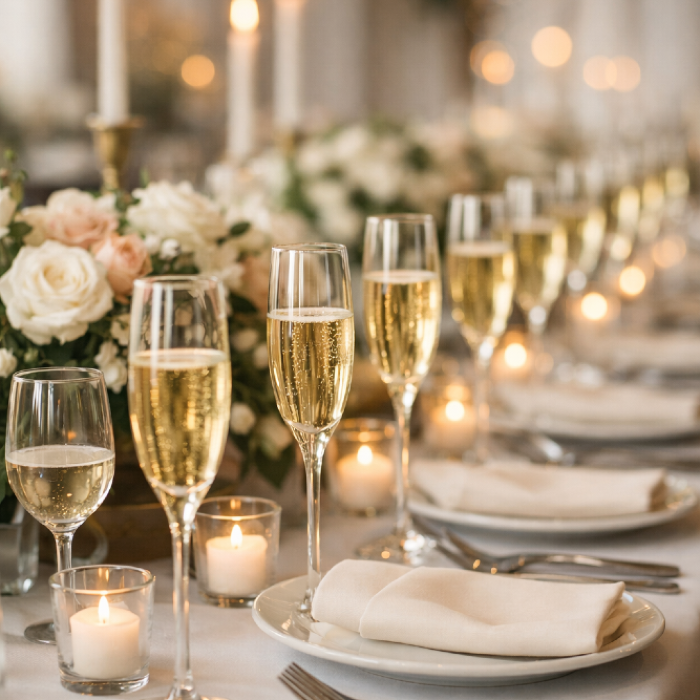
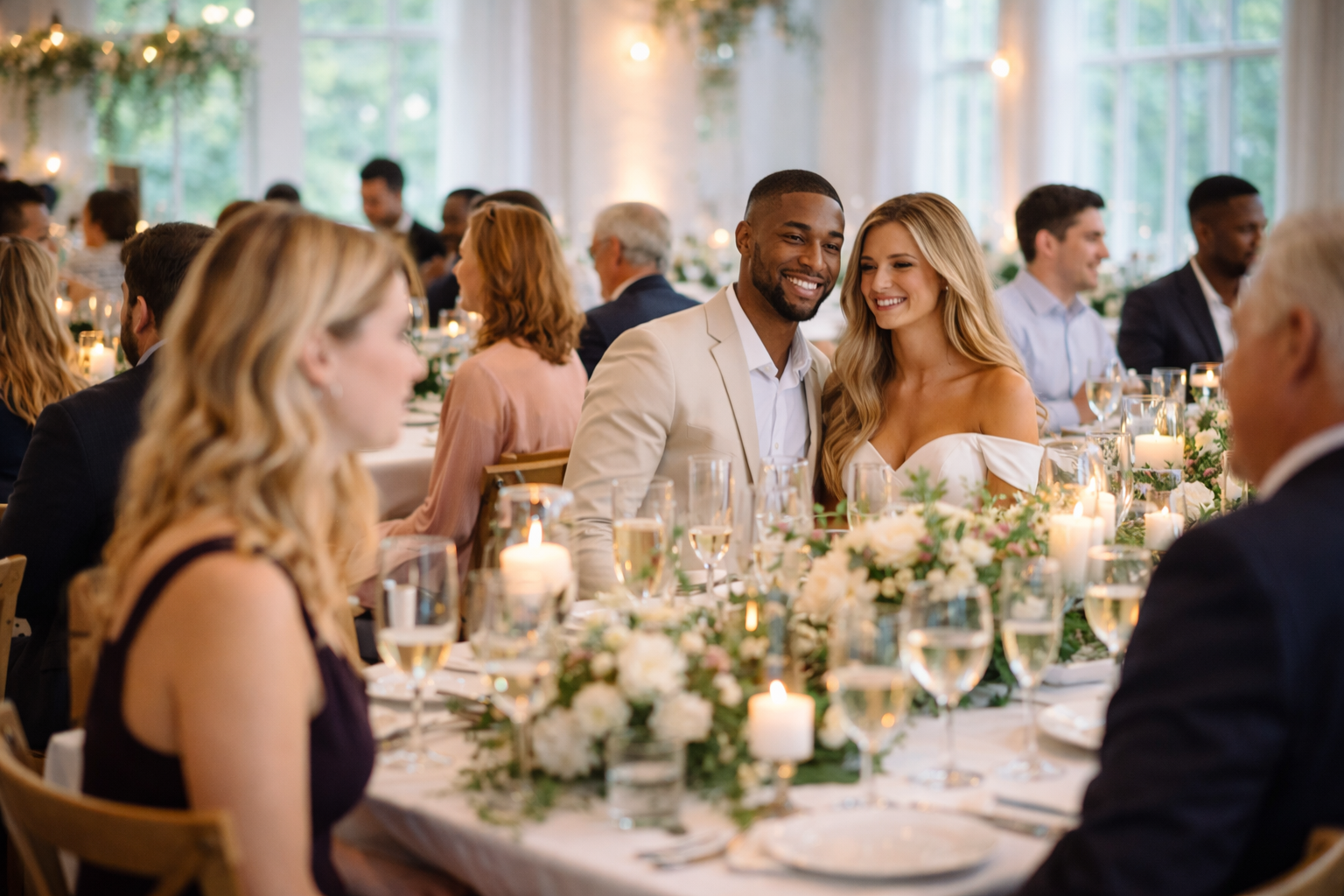
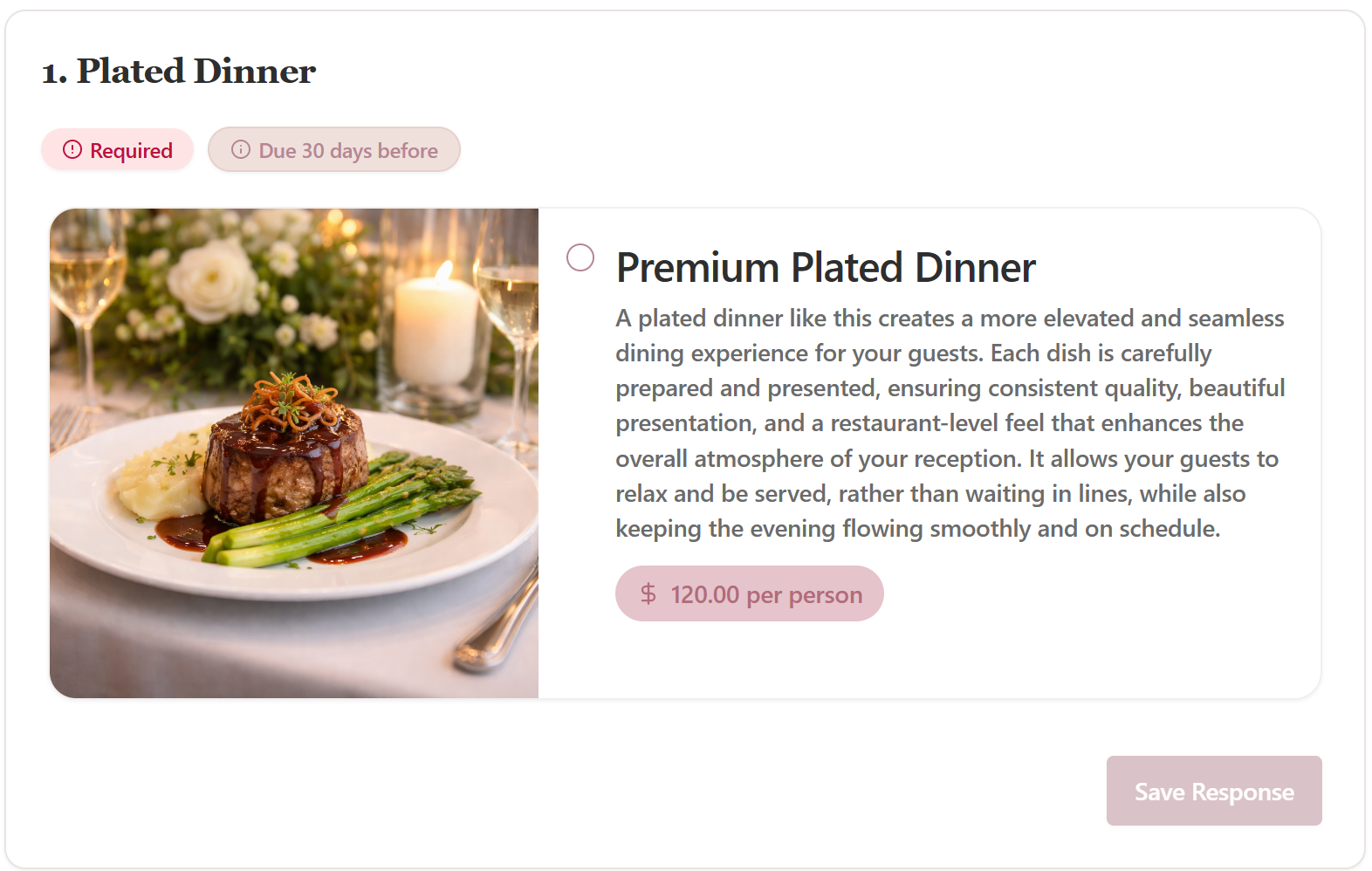
When a couple is asked whether they want to add a champagne toast, the question alone is abstract. However, when that same option is paired with imagery of a fully set reception table and a clear explanation of the experience it creates, the decision becomes tangible.
Couples do not buy add-ons because they are listed. They choose them because they can clearly see how those choices enhance their wedding day.
Why guided workflows increase upsells and completion rates
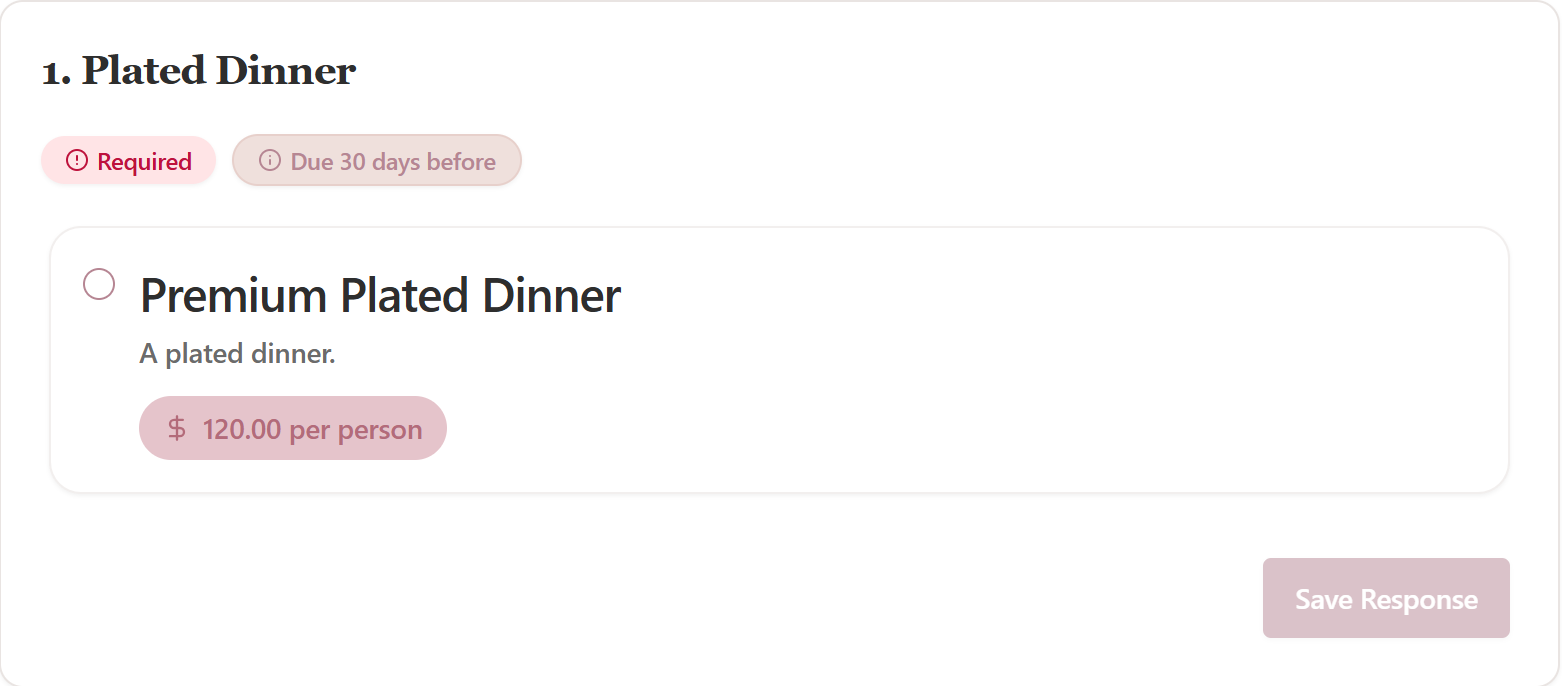
Beyond visuals, structure plays an equally important role in increasing wedding venue revenue. When decisions are presented in an open-ended way, they are easy to postpone. When they are part of a guided workflow, they are far more likely to be completed.
For wedding venues, this means that simply offering add-ons is not enough. Couples need a structured system that helps them choose upgrades, understand pricing, and make decisions confidently.
How Seated With Love helps you increase wedding venue revenue
Seated With Love is designed specifically to help venues increase revenue without increasing workload by turning the wedding planning process into a structured, guided system.
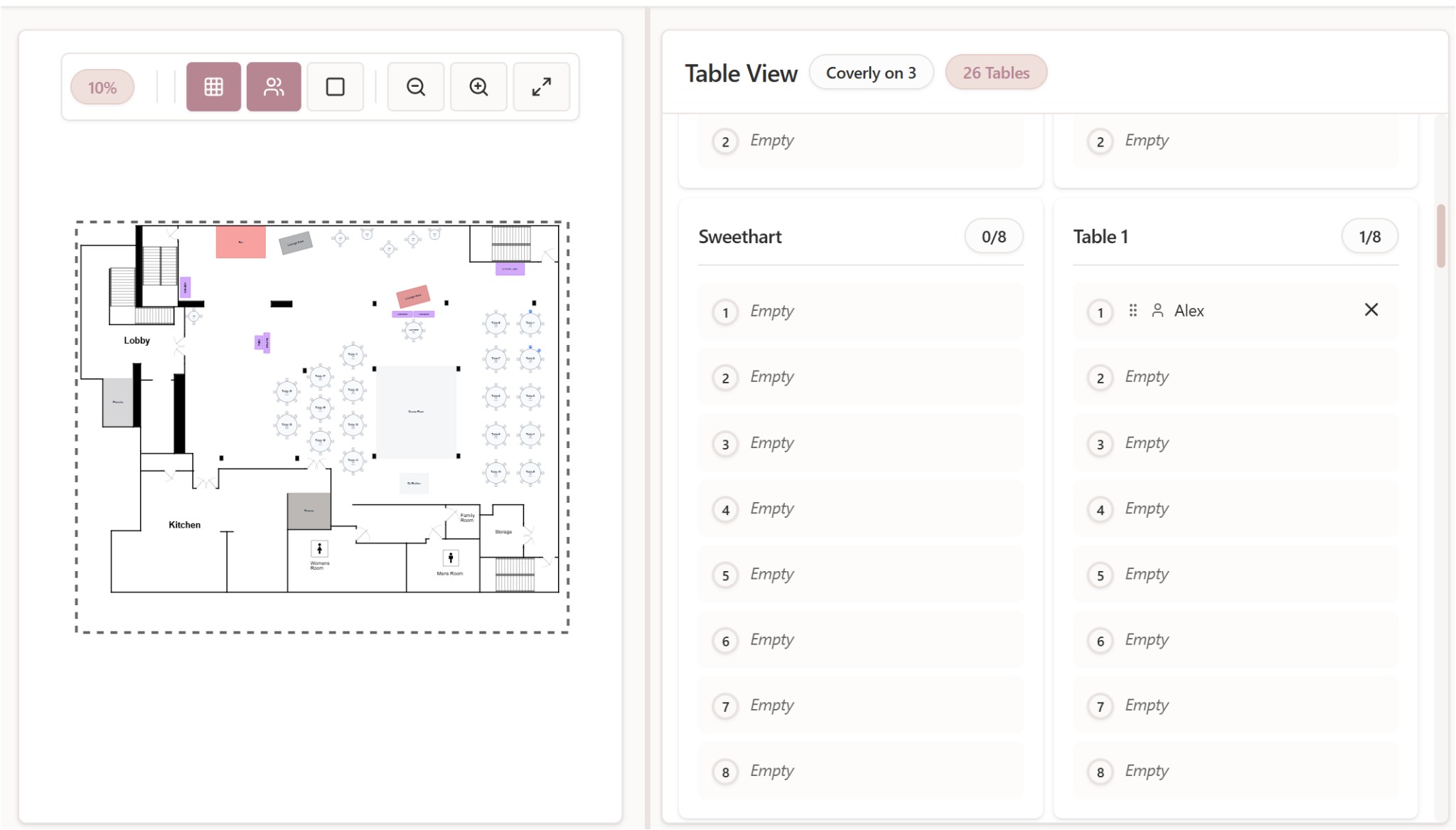
Each couple receives a planning portal where they select add-ons, choose upgrades, and complete required details in one place. Add-ons are presented visually with descriptions that explain their value, making it easier for couples to say yes.
Pricing is transparent and flexible, whether per person, per table, per hour, or flat rate, allowing couples to clearly understand their options and make faster decisions.
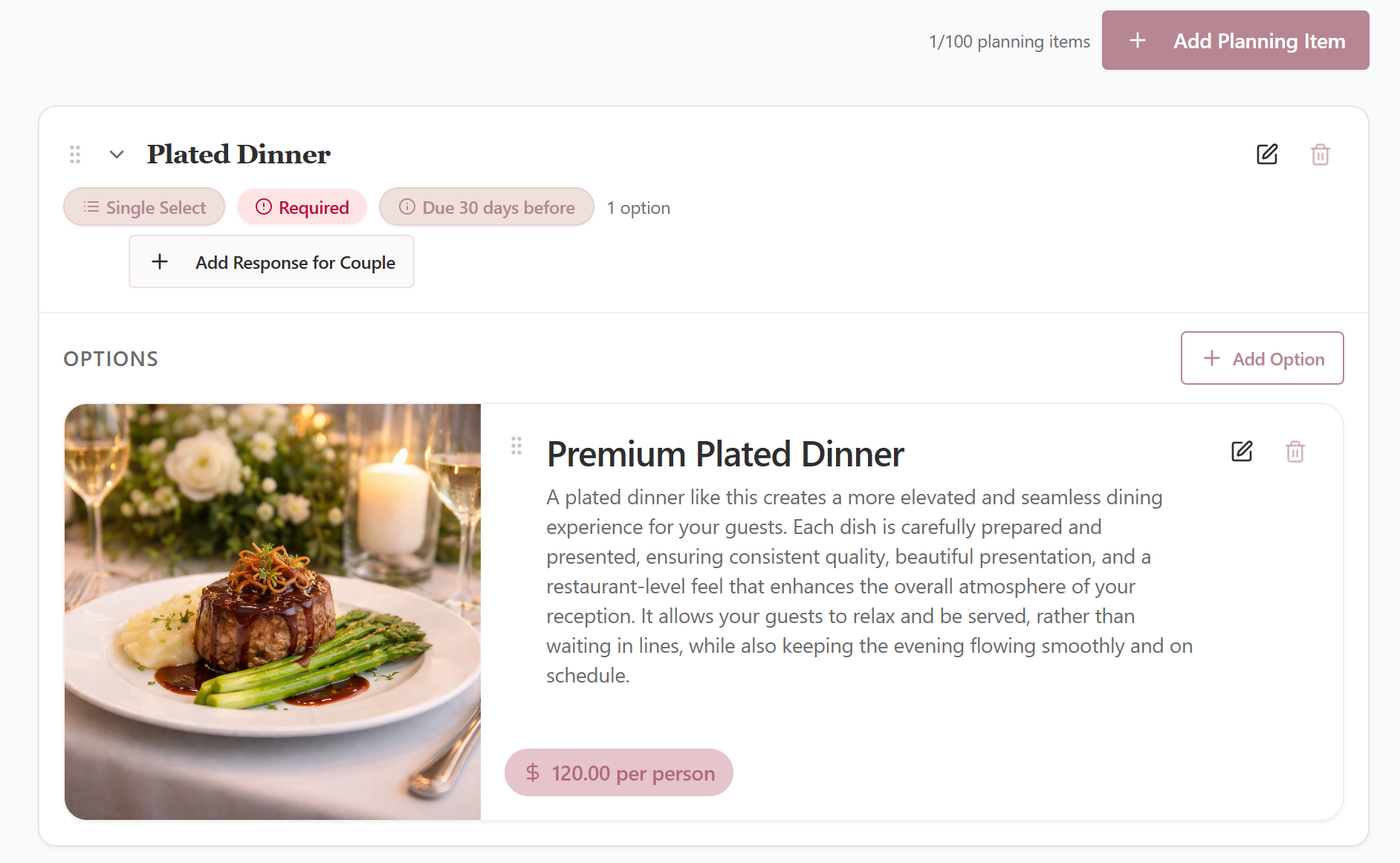
Automated follow-ups ensure that every detail is completed on time, including guest counts, meal choices, bar packages, seating charts, and add-ons. Nothing is missed, and your team no longer needs to manually track progress.
All information flows directly into your dashboard, giving your team real-time visibility into every wedding without searching through emails or messages.
The bottom line
You do not need more weddings to grow your business. You need a better system for managing and upselling the weddings you already have.
When add-ons are presented visually, explained clearly, and guided through a structured workflow, couples are more likely to engage and spend more. When follow-ups are automated and consistent, decisions happen on time and revenue opportunities are captured.
Even a modest 20% increase in add-on conversions can result in an additional $1,500 to $3,000 per wedding, depending on your offerings. Over the course of a season, that can represent a significant increase in total revenue without adding a single new booking.
If you want to see how this works for your venue, you can start setting up your workspace with Seated With Love and begin capturing more revenue from the weddings you already have.
Frequently Asked Questions
How can I increase wedding venue revenue without booking more weddings?
You can increase revenue by focusing on add-ons and upsells such as bar packages, décor upgrades, and guest experience enhancements. Structuring how these options are presented and ensuring consistent follow-up significantly improves conversion rates.
What are the best wedding venue upsells?
Common high-performing upsells include upgraded bar packages, champagne toasts, specialty linens, enhanced florals, late-night food, and interactive guest experiences like photo booths.
Why do couples delay making wedding decisions?
Wedding planning involves a high number of decisions, and many couples feel overwhelmed. Without structured guidance and clear presentation, decisions are often postponed or missed entirely.
Does automation really help wedding venues increase revenue?
Yes. Automated follow-ups improve response rates, ensure no decisions are missed, and free up staff time. This allows venues to capture more upsell opportunities while improving operational efficiency.